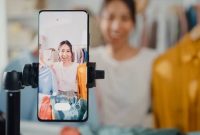
A digital night market is happening on your phone. Products are demonstrated at full speed, viewers flood the chat, and a countdown flashes across the screen while a discount suddenly drops. That is the appeal of livestream shopping platforms. The experience feels less like browsing an online store and more like standing in a crowded market where everyone seems to be buying the same thing.
That atmosphere is powerful by design. Research published in 2025 found that suspense, limited availability, and expectation can increase impulse buying during live-stream commerce. Another Indonesian study involving 295 respondents found that scarcity and live-stream discounts can increase FoMO, which then contributes to impulsive purchases.
So, should you avoid livestream shopping altogether? Not necessarily. The smarter move is learning how to separate a genuinely good deal from a well-produced sense of urgency.
1. Livestream Shopping Platforms Work Best When You Know the Real Price First
Before chasing a voucher, establish what the product is actually worth. A 30% discount means little if the original price has been inflated or if shipping and minimum-spend conditions erase the saving.
Check the Product Outside the Livestream
Open another marketplace or the brand’s official store and compare:
- Current selling price
- Previous price
- Shipping cost
- Warranty
- Seller rating
- Return policy
- Product variant
The FTC’s consumer guidance similarly recommends checking refund and return rules and using safer payment methods when buying through online marketplaces.
Calculate the Final Checkout Price
Don’t compare the percentage shown on screen. Compare the amount that actually leaves your account.
A simple formula is:
Final cost = product price + shipping + additional fees − applicable vouchers
That’s the number that matters.
Read the Voucher Conditions Before the Countdown Ends
A flash voucher may require a minimum purchase, specific payment method, selected product, or limited redemption quantity.
That means the biggest-looking number isn’t automatically the best deal.
Use a Personal Price Ceiling
Decide your maximum price before the host starts pushing the offer.
For example, if you’re willing to spend $25 on a product, don’t suddenly accept $35 because the host says there are only 20 seconds left.
That small rule creates distance between your budget and the excitement of the stream.
2. Flash Sale Vouchers Can Save Money Without Turning Into a Shopping Trap
Flash sale vouchers are useful when they reduce the price of something you already planned to buy. They’re dangerous when the discount becomes the reason you want the product in the first place.
Research on live-stream commerce consistently identifies time-limited promotions and discounts as important triggers associated with impulse buying. A 2025 literature review examining 51 studies also found platform features, streamer attributes, and consumer characteristics all play roles in impulsive purchasing.
A practical rule is simple:
Need first, voucher second.
Before clicking claim, ask:
- Did I want this before entering the livestream?
- Would I buy it without the countdown?
- Is the final price genuinely lower than other stores?
- Will I still use it 30 days from now?
If the answer to most of these is no, let the voucher disappear.
That’s often cheaper than “saving” 40% on something you never needed.
3. Impulse Buying Gets Stronger When Scarcity, Chat and Emotion Work Together
The real challenge isn’t the product page. It’s the atmosphere around it.
Impulse buying in live commerce is often shaped by several stimuli arriving simultaneously. Research from Indonesia has linked live streaming, discounts, scarcity and FoMO with impulsive buying, while newer research shows that interactive and immersive features can increase emotional arousal and purchase intention.
Scarcity Makes Waiting Feel Expensive
“Only 12 left.”
“Last voucher.”
“Price returns in 30 seconds.”
These messages create the perception that delaying the decision has a cost.
But scarcity doesn’t prove that the product is valuable.
Treat it as a marketing signal, not evidence of quality.
Viewer Numbers Can Create Social Pressure
Seeing hundreds of people watching or dozens of buyers checking out can trigger a simple thought: Everyone else is getting it.
A 2026 study of 2,419 consumers found that perceived competition and bandwagon effects can mediate the relationship between scarcity cues and impulse behavior in live-stream commerce.
Popularity is useful information, but it isn’t a substitute for product research.
The Chat Can Be Helpful and Misleading
Real-time comments can answer practical questions that a product description misses.
But chat also creates momentum.
One person says “checkout,” another posts a purchase screenshot, and suddenly hesitation feels like missing out.
Use chat for information, not validation.
Give Yourself a Cooling-Off Rule
For cheap, planned purchases, a short pause may be enough.
For expensive items, leave the livestream completely and compare the product later.
If the deal still looks good without the music, countdown and enthusiastic audience, it’s probably worth another look.
4. Host Charisma Is Useful for Demonstrations but Should Not Make the Decision for You


A charismatic host can explain products faster than a static product page ever could. They can demonstrate size, texture, fit, sound, or real-world use.
That’s one of the genuine strengths of live commerce.
But charisma can also blur the line between liking the presentation and liking the product.
Ask yourself:
- Would I want this if another host presented it?
- Are the claims supported by specifications?
- Is the demonstration showing normal use or an unusually favorable scenario?
- Are important limitations being discussed?
A 2025 study found personalization and informativeness can influence emotional arousal in live shopping, while technological features such as guided shopping can increase immersion. Interestingly, professionalism and responsiveness alone did not significantly affect arousal in that study.
In other words, good presentation matters, but you shouldn’t confuse presentation quality with product quality.
5. Live Commerce Is Worth Using When the Interaction Adds Real Buying Information

The best live commerce experience isn’t simply a discount broadcast.
It gives shoppers information they couldn’t easily get from a static product page.
Watch Demonstrations That Answer Practical Questions
For clothing, look at fit and movement.
For cosmetics, watch application.
For electronics, see actual operation.
For food, observe preparation and portion size.
The demonstration should reduce uncertainty.
Use Real-Time Q&A Strategically
Don’t ask, “Is this good?”
Ask something measurable:
- What is the exact material?
- What is the warranty period?
- Does this variant include the accessory?
- What happens if the item arrives damaged?
Specific questions produce more useful answers.
Compare the Offer Before You Checkout
Pause the stream if necessary.
Search the exact model number.
Check at least two competing prices.
Then return to the cart.
This takes longer, but it prevents a 30-second countdown from making a 30-day financial decision.
For sellers and creators, checkout friction matters too. If you’re interested in the other side of live commerce, this guide on common live shopping mistakes before checkout explains why even interested viewers can abandon a purchase.
Treat Livestreams as Discovery, Not Automatic Permission to Buy
This is perhaps the healthiest mindset.
A livestream can introduce you to a product.
It can demonstrate something better than static photos.
It can reveal useful information through real-time interaction.
But the final purchase decision should still happen on your terms.
6. The Best Livestream Deal Is the One You Would Still Want Tomorrow


A genuinely smart shopping routine doesn’t require avoiding discounts. It requires controlling the moment when the discount appears.
Before checkout, run this five-second test:
- Need: Was this already on my list?
- Price: Is the final cost genuinely competitive?
- Proof: Have I checked specifications and reviews?
- Timing: Would I buy it without the countdown?
- Use: Will I realistically use it?
If the product passes all five, claim the deal.
If not, let it go.
There will always be another livestream, another voucher, and another countdown. The rarest thing in online shopping isn’t a discount.
It’s knowing when not to buy.


Kavya Menon is a digital audience researcher with experience studying viewer behavior across education, gaming, shopping, wellness, and entertainment livestreams.
She previously worked with a media intelligence consultancy that analyzed how people discover and interact with live content.
Her writing explores emerging livestream categories, niche communities, audience preferences, and the changing habits of viewers across different platforms.