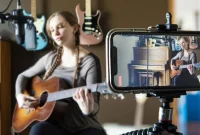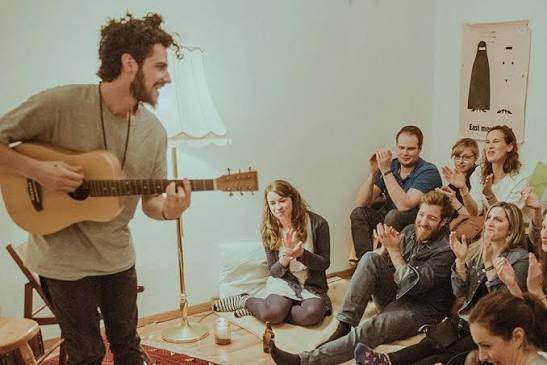
Spotify’s recommendation engine is remarkably good at personalization, yet that convenience can create its own kind of musical tunnel. You may keep hearing polished releases from artists already close to your listening profile while completely missing the guitarist performing to 40 people in a bedroom across the world. That’s where live music streams become interesting. They put discovery back into the hands of communities, creators, and curious listeners.
The difference is important. A playlist asks an algorithm to predict what you’ll like. A livestream lets you stumble into something you weren’t actively looking for. Twitch has even built dedicated infrastructure around smaller music creators, including its Support Small Music Streamers shelf designed to help emerging musicians build communities and get discovered.
This doesn’t mean Spotify is bad at discovery. In fact, Spotify says more than half of new artist discoveries on its platform come from programmed playlists, including personalized products such as Mixes, Radio, and Autoplay. The point is that live communities create a different discovery path, one based on human curiosity and social momentum.
1. Indie Artist Discovery Starts With People Instead of Recommendation Feeds
The strongest advantage of live music is the feeling that you’ve found something before everyone else. That sense of discovery is difficult to manufacture with a perfectly optimized playlist.
Why Small Music Channels Feel More Personal
A small channel usually has fewer layers between artist and audience. You can hear a song, ask what inspired it, request another track, or simply watch the performer experiment.
That makes indie artist discovery feel closer to finding a musician at a tiny local venue than browsing another endless catalog.
Twitch has explicitly recognized this opportunity. Its music initiatives include dedicated promotion for smaller musicians and tools intended to help them grow communities around live performances.
The Viewer Often Becomes Part of the Discovery
A viewer might enter because someone mentioned a singer in chat.
Then another person shares the stream.
Someone clips a particularly good performance.
Suddenly, one tiny broadcast becomes a chain of recommendations.
That’s fundamentally different from waiting for an algorithm to decide which song deserves another impression.
Acoustic Sessions Have an Unexpected Advantage
Production quality isn’t always the selling point.
A slightly imperfect vocal, room ambience, finger noise on an acoustic guitar, or a musician restarting a song can make a performance feel more human.
For a deeper look at why stripped-down performances can connect differently, this exploration of live acoustic sessions is a useful companion read.
The Best Discovery Often Happens by Accident
This is where livestreaming has a genuine edge.
You don’t necessarily search for “unknown indie singer.”
You enter a music category, notice a thumbnail, hear thirty seconds, and suddenly think, Wait, who is this?
That accidental discovery is the beginning of a fandom.
2. Channel Raiding Turns One Music Community Into Another

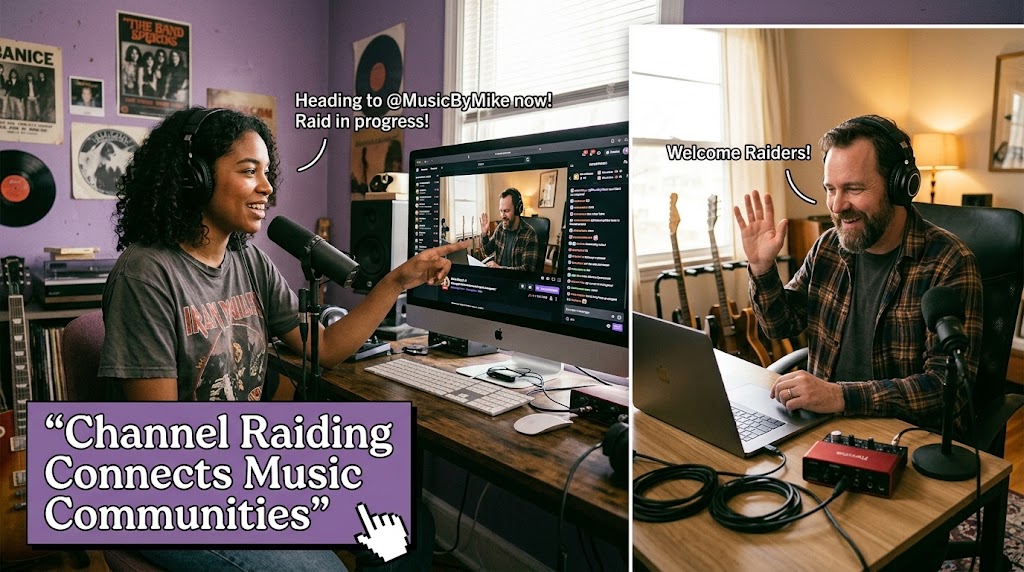
A powerful part of Twitch’s ecosystem is channel raiding. Instead of ending a stream and sending viewers away, a broadcaster can send their audience directly to another creator.
How Twitch Raids Actually Work
Twitch describes Raids as a feature that lets a broadcaster send viewers to another broadcaster’s stream. The platform specifically frames it as a way to make connections, network, share audiences, and grow communities.
The mechanics are simple:
- The streamer selects another channel.
- Viewers receive a raid notification and countdown.
- The audience is transferred to the target channel.
- The receiving creator gets an immediate wave of potential new listeners.
Why Raids Matter More for Small Musicians
Imagine a musician finishing a two-hour acoustic set with 70 viewers.
Instead of saying goodbye, they raid another independent singer with 25 viewers.
The second artist suddenly has a room full of people who already enjoy live music.
That’s not guaranteed conversion, but it creates an opportunity that ordinary discovery feeds can’t quite reproduce.
Twitch itself originally described Raids as a creator-driven way to support one another and grow communities.
A Raid Works Best When the Audience Actually Fits
Randomly sending viewers anywhere isn’t a strategy.
A jazz pianist should probably raid another musician, songwriter, producer, or music discussion channel rather than a completely unrelated category.
The closer the audience overlap, the more likely the incoming viewers will stay.
Raiding Creates a Network Rather Than a Single Channel
This is the bigger story.
One musician introduces another.
That artist introduces a third.
Viewers move between communities.
Collaborations become easier.
Over time, a collection of small channels starts behaving like a digital music scene.
That’s the real power of channel raiding. It doesn’t merely transfer viewers. Done well, it transfers trust.
3. Digital Busking Gives Independent Musicians a New Kind of Stage
Street performers have always understood something the music industry sometimes forgets: people don’t need to know your name before they can stop and listen.
Livestreaming recreates that behavior online.
What Makes Digital Busking Different
Traditional busking depends on foot traffic.
Digital busking depends on platform traffic.
A musician can perform from a bedroom, rooftop, home studio, or rehearsal space and potentially reach listeners who would never walk past their physical location.
The audience is still discovering the performer in real time.
The Performance Becomes the Promotion
Instead of saying, “Please listen to my new song,” the artist demonstrates why someone should care.
That changes the promotional equation.
A strong live performance can lead viewers toward:
- Spotify streams
- YouTube subscribers
- mailing lists
- merchandise
- concert tickets
- direct fan support
Spotify also gives artists tools such as Discovery Mode to increase the likelihood of selected tracks appearing in personalized recommendation contexts, although Spotify stresses that recommendation is not guaranteed and listener engagement still matters.
Small Imperfections Can Become a Strength
A perfectly polished recording tells you what the finished product sounds like.
A live performance shows how the artist thinks.
You hear changes.
You see reactions.
You notice personality.
That extra context can turn an anonymous track into a memorable musician.
Consistency Beats One Viral Performance
The biggest mistake is treating one successful stream as the whole strategy.
The better approach is predictable:
- Stream on a recognizable schedule.
- Keep a consistent musical identity.
- Talk with viewers.
- Test original songs alongside familiar material.
- Collaborate with nearby creators.
- Send viewers toward your official music profiles.
That is how digital busking becomes an actual audience-building system rather than a novelty.
4. Independent Musicians Need More Than Visibility to Build Real Fans
Visibility is only step one.
The challenge for independent musicians is converting a casual viewer into someone who remembers the artist tomorrow.
That requires a clear identity.
A good livestream should make it obvious:
- What kind of music do you perform?
- Why should someone follow you?
- When will you stream again?
- Where can listeners hear your recorded music?
- What makes your community different?
Spotify reports that artist profiles are important discovery and engagement points, with millions of fans visiting artist pages daily.
So the livestream shouldn’t exist alone. It should connect to the artist’s wider ecosystem.
5. The Organic Discovery Loop Is Bigger Than Spotify Alone
The smartest approach isn’t choosing between algorithms and communities.
Use both.
A listener might discover a musician through a Twitch performance, follow the channel, hear a song during another creator’s raid, save the track on Spotify, and eventually attend a concert.
That’s an organic discovery loop.
The key is that every stage reinforces the next one.
For listeners, the recommendation is simple: occasionally leave the comfort of algorithmic playlists and browse live music categories. Follow small creators. Stay for a song instead of judging a stream by its viewer count.
For artists, focus less on appearing “big” and more on becoming memorable.
A musician with 30 loyal listeners who talk, share, return, and bring friends has something valuable already.
The underground isn’t necessarily hidden anymore.
Sometimes, it’s simply live.
Q&A
Are live music streams better for discovering artists than Spotify playlists?
Not necessarily better, but different. Spotify excels at personalized discovery at scale, while livestreams add personality, conversation, and unexpected human recommendations.
Can a small musician really benefit from Twitch Raids?
Yes, particularly when the raiding and receiving communities have overlapping interests. A raid doesn’t guarantee new followers, but it can introduce an artist to a relevant audience immediately.
Should independent artists livestream original songs or covers?
A mixture usually works better. Familiar songs can reduce the barrier for new viewers, while original material gives them a reason to remember and follow the artist.


Kavya Menon is a digital audience researcher with experience studying viewer behavior across education, gaming, shopping, wellness, and entertainment livestreams.
She previously worked with a media intelligence consultancy that analyzed how people discover and interact with live content.
Her writing explores emerging livestream categories, niche communities, audience preferences, and the changing habits of viewers across different platforms.