Live skill workshops have become one of the most useful learning formats for people who are tired of watching endless tutorials without actually improving. A recorded tutorial can explain a topic well, but it is easy to pause, save, forget, and move to another video before practicing anything.
That is where live learning content feels different. In a live workshop, the learner is not only watching. They may follow the instructor, complete a small task, ask questions, compare their progress, or notice mistakes in real time. The room moves together, and that movement can push people to learn more actively.
On Explore Livestream Sound of Text, this topic belongs in the Learning category because it looks at a specific type of live content: skill-based workshops. This is not about joining a webinar link or choosing a formal certification. It is about why live workshops have their own place inside online learning culture.
Live Skill Workshops Are Not Just Online Classes
Live workshops can look similar to online classes from the outside, but the experience is not exactly the same. A class may focus on explanation, while a workshop usually asks learners to do something during the session.
The Main Value Is Practice
The strongest part of a live skill workshop is the practice element. Learners are often encouraged to follow along while the instructor demonstrates a task.
This format works well for skills such as:
- design basics
- writing practice
- video editing
- coding exercises
- public speaking
- digital marketing tasks
- language practice
- productivity systems
- creative planning
The session becomes less about “here is the information” and more about “let’s try this together.” That small shift matters. It turns the learner from a passenger into someone holding the wheel.
Live Timing Creates Gentle Pressure
Recorded tutorials are flexible, but that flexibility can become a trap. A person may save ten videos and finish none of them. A live workshop has a schedule, and the schedule creates a soft pressure to show up.
That pressure is not always bad. Sometimes learners need a clock on the wall. When a session starts at a specific time, people are more likely to prepare, open their notes, and focus for a while.
Live timing gives the learning moment a shape. Without it, learning can melt into the day like ice left near a window.
Why Learners Choose Live Workshops Over More Tutorials

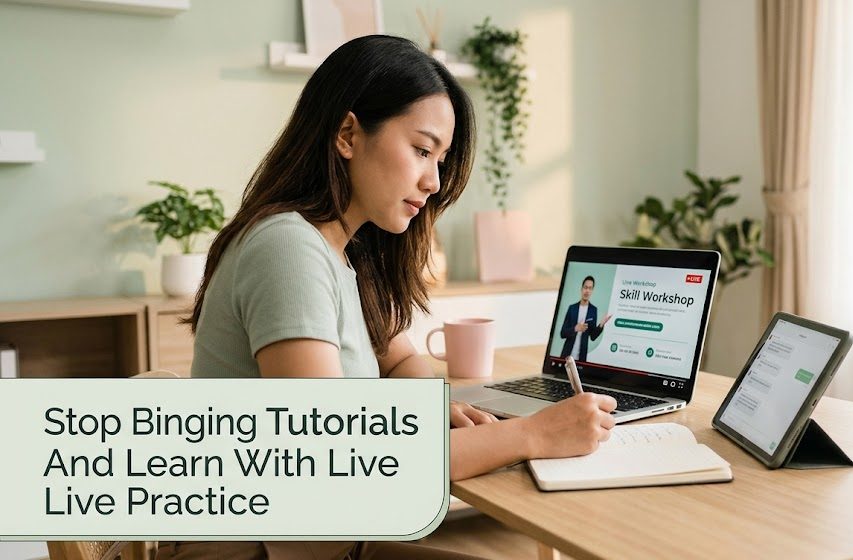
Tutorial binging can feel productive, but it often creates an illusion of progress. A learner may watch many lessons and still struggle when it is time to do the task alone.
They Want Feedback, Not Just Information
One reason live workshops feel more useful is the possibility of feedback. Even when the instructor cannot review every learner’s work, the session can still include question breaks, examples, corrections, and common mistake discussions.
Feedback helps learners understand what they are missing.
A recorded tutorial says, “Here is how it works.”
A live workshop can say, “This is where people usually get stuck.”
That difference can save hours of confusion.
They Need A Clear Starting Point
Many learners do not fail because they lack motivation. They fail because they do not know where to begin. A live workshop usually narrows the focus into one practical task.
Instead of saying, “Learn design,” a workshop might say:
“Create one simple poster layout in 60 minutes.”
Instead of saying, “Learn writing,” it might say:
“Write a short product description and improve the opening line.”
That smaller promise feels easier to follow. It gives the learner a doorway instead of a maze.
What Makes A Learning Livestream Actually Useful
Not every live learning session is effective. Some are just long lectures with a chat box beside them. A useful workshop needs structure, interaction, and a clear learning outcome.
A Good Workshop Has A Visible Outcome
The learner should know what they will finish or understand by the end of the session. Without a visible outcome, the workshop may feel like a floating talk.
Here is a simple way to compare learning livestream formats:
| Live Learning Format | Best For | Weakness If Done Poorly |
|---|---|---|
| Live lecture | Explaining concepts | Can become passive and tiring |
| Skill workshop | Practicing one task | Needs clear time management |
| Live critique | Reviewing work | Can feel intimidating without guidance |
| Study room | Building focus | May lack direct teaching |
| Q&A session | Solving confusion | Can become scattered |
A live skill workshop works best when the result is specific. Learners should leave with something: a draft, a checklist, a small project, a clearer process, or a corrected mistake.
The Instructor Should Teach While Doing
Live workshops become stronger when the instructor demonstrates the skill instead of only talking about it. Watching someone work in real time helps learners see the small decisions that edited tutorials often hide.
For example, in a design workshop, the instructor may change a layout, explain why the first version feels crowded, then adjust spacing. In a writing workshop, the instructor may rewrite a sentence and explain why the second version is clearer.
Those real-time adjustments are valuable. They show the messy middle of learning, not only the polished result.
The Best Topics For Live Skill Workshops
Some topics fit live workshops better than others. The best topics usually involve practice, decision-making, and visible improvement within a short time.
Creative Skills Work Well In Live Format
Creative skills often benefit from live demonstration because learners can see how ideas change during the process.
Examples include:
- Writing stronger introductions.
- Designing simple social media graphics.
- Editing short videos for clearer pacing.
- Planning content calendars.
- Creating presentation slides.
These topics are practical enough for learners to follow during the session. They also allow room for examples and small corrections.
Technical Skills Need Smaller Steps
Technical topics can work in live workshops, but they should be broken into smaller tasks. A session that tries to teach too much software or code at once can overwhelm beginners.
Better technical workshop topics may include:
- fixing one common spreadsheet problem
- setting up a simple website page
- editing audio for clearer voice
- creating one automation workflow
- understanding one analytics dashboard
The more technical the topic, the more important the pacing becomes. A rushed workshop can make learners feel like the instructor is running while they are still tying their shoes.
How Viewers Can Get More Value From Learning Livestreams
A live workshop is more useful when viewers join with the right mindset. Watching passively is still possible, but the format becomes stronger when learners prepare to participate.
Prepare One Small Goal Before Joining
Before watching a live workshop, learners can write one personal goal. It does not need to be big.
For example:
- “I want to understand how to start the task.”
- “I want to finish one draft.”
- “I want to ask one question.”
- “I want to spot my biggest mistake.”
- “I want to copy the process and try it later.”
A small goal helps the learner stay focused when the session starts moving.
Keep Notes That Can Be Used Later
Notes should not only repeat what the instructor says. Better notes capture useful actions.
Instead of writing:
“Good lighting is important.”
Write:
“Move the light to the front, not behind the subject.”
Action notes are easier to use after the workshop ends. They turn information into a next step.
Why This Format Belongs In Online Learning Culture
Live skill workshops are not replacing recorded courses. Both formats can help learners in different ways. Recorded content is useful for review, slow learning, and flexible schedules. Live workshops are useful for action, feedback, focus, and shared momentum.
For people who keep collecting tutorials but never practice, a live workshop can feel like a small push. It gives learning a time, a task, and a room where progress is expected.
That is why this category is worth exploring. Live learning content is not only about information. At its best, it becomes a place where learners stop watching from the doorway and finally step inside.


Kavya Menon is a digital audience researcher with experience studying viewer behavior across education, gaming, shopping, wellness, and entertainment livestreams.
She previously worked with a media intelligence consultancy that analyzed how people discover and interact with live content.
Her writing explores emerging livestream categories, niche communities, audience preferences, and the changing habits of viewers across different platforms.