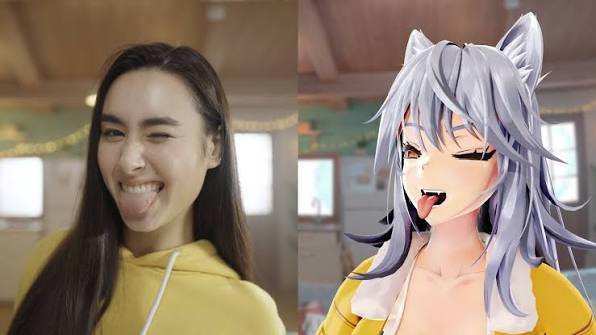
Watching someone play a game sounds simple until millions of viewers choose it over playing themselves. The rise of gaming livestream trends shows that live gaming is no longer just about gameplay. It has become a social entertainment format where chat, creators, challenges, and even viewers’ decisions can shape what happens on screen.
The biggest shift is easy to spot. Viewers increasingly want participation rather than passive watching. Twitch supports this direction through Extensions, interactive overlays, chat features, predictions, and game integrations that let audiences influence or interact with live content.
That matters for creators because retention is no longer driven only by how good someone is at a game. A strong personality, unpredictable moments, community rituals, and opportunities to participate can turn an ordinary playthrough into an event. Recent live-streaming data also shows gaming remains a huge part of the wider live ecosystem, with Q1 2026 reaching 17 billion hours watched across tracked platforms.
1. Gaming Livestream Trends Built Around VTubing and Speedrunning Culture

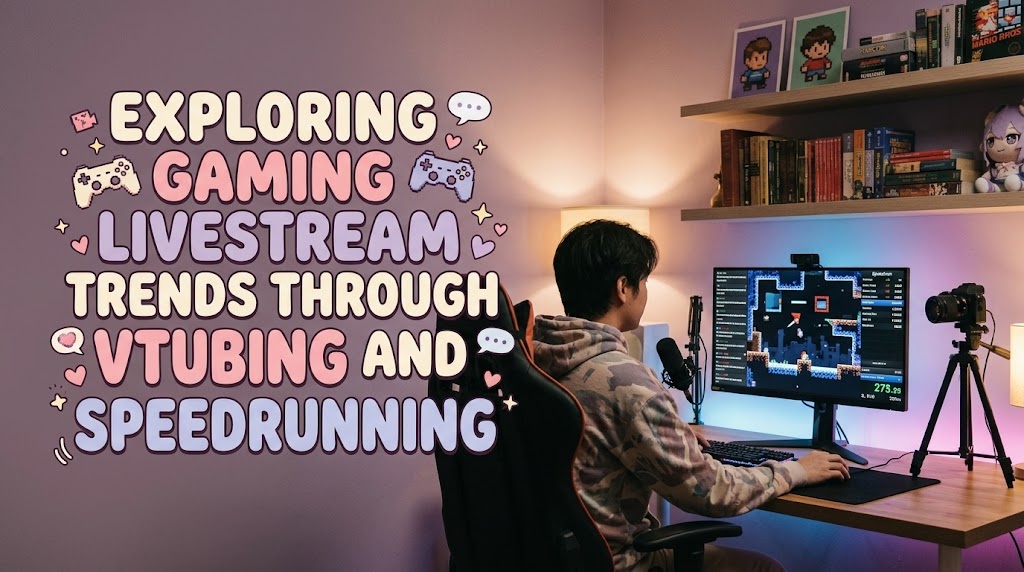
Two formats illustrate how gaming audiences are changing: virtual creators and highly specialized gameplay. The vtubing phenomenon works because the avatar becomes part of the entertainment identity, while speedrunning offers a completely different hook through mastery, records, and tension.
Why VTubing Works Beyond the Avatar
VTubing isn’t simply replacing a webcam with an animated character. The strongest virtual creators build recognizable personalities, recurring jokes, lore, and community language.
That creates a useful lesson for ordinary streamers. Viewers often return for the person, not just the game. A creator can therefore develop recognizable segments, reactions, catchphrases, or challenges that remain interesting even when the game changes.
Speedrunning Turns Skill Into a Story
Speedrunning has another advantage: the objective is immediately understandable.
Beat the record. Survive the route. Fix the mistake. Try again.
That structure naturally creates tension. The audience understands why a failed jump matters and why shaving three seconds from a run can become a major moment.
The speedrunning culture also encourages repeat viewing because viewers can compare attempts, routes, strategies, and personal bests rather than simply watching the same game repeatedly.
Why Short Clips Feed Long Streams
A remarkable speedrun, funny VTuber reaction, or unexpected failure can become a clip before the original stream ends.
This creates a useful content loop:
- Live stream creates the moment.
- Clip gives the moment a second life.
- Short-form content attracts new viewers.
- New viewers discover the next live session.
YouTube’s 2025 year-end trends similarly highlighted creators and livestream personalities as major cultural forces, showing how live personalities increasingly extend beyond a single format.
The Practical Takeaway for Small Creators
Don’t copy the surface of a trend. Copy its mechanism.
If you’re not a speedrunner, create a repeatable challenge. If you’re not a VTuber, develop a recognizable visual or personality hook. The goal is to give viewers something they can identify within seconds.
2. Chat Integration and Interactive Viewing Change What Audiences Expect
The most interesting development isn’t simply that viewers are chatting. It’s that the chat integration can become part of the actual gameplay.
Twitch’s developer documentation specifically supports interactive experiences where viewers can influence streams through Extensions, overlays, panels, and game integrations.
From Comment Section to Control Panel
Imagine viewers voting on the next weapon, triggering an event, predicting an outcome, or making the creator face an additional challenge.
Suddenly, the audience isn’t watching a game.
They’re helping create the session.
Twitch has documented examples where viewers could affect gameplay directly. In one notable Dead Cells integration, Twitch chat could influence gameplay, helping the game’s second launch generate substantially more watched minutes and renewed streaming activity.
Why Interaction Can Improve Viewer Retention
Interaction gives viewers a reason to stay.
If someone has just voted on what happens next, leaving means they might miss the result. That small psychological shift can make a stream feel more like an unfolding event.
This is where viewer retention becomes closely connected with participation. The best interaction doesn’t interrupt the stream; it creates another reason to watch it.
Don’t Turn Every Second Into a Poll
More interaction isn’t automatically better.
Too many alerts, votes, sound effects, or chat commands can make the stream exhausting. Twitch’s own Extension guidance emphasizes that interactive elements should enhance what is happening rather than distract from it.
A better rule is simple:
- One interaction should have one clear purpose.
- The audience should understand it immediately.
- The result should appear quickly.
- The streamer should react to it.
That keeps interaction meaningful rather than noisy.
The Best Interactive Moments Feel Organic
The strongest examples don’t announce, “Now we will interact.”
The interaction simply happens.
A viewer chooses an option. The game reacts. The streamer panics. Chat explodes.
That chain is far more entertaining than a complicated interface nobody understands.
3. Viewer Retention Depends on Story, Community and Repeatable Moments
The future of gaming livestreams isn’t necessarily about having the newest game or the most expensive setup. It’s increasingly about creating reasons to return.
A creator can build this through recurring challenges, community competitions, speedrun attempts, viewer-controlled events, or relaxed sessions. Even cozy gaming can work when the atmosphere gives tired viewers somewhere comfortable to spend time, as explored in this guide to cozy gaming livestreams.
The strongest gaming livestream trends therefore share one thing: they create a relationship between viewer and creator rather than simply displaying gameplay.
For creators, I’d prioritize three things:
- Create a recognizable format. Give viewers a reason to know what they will get.
- Build participation carefully. Let viewers influence moments without hijacking the entire stream.
- Repurpose memorable moments. Turn strong live moments into clips, Shorts, posts, or community discussions.
The viewer retention problem is often treated like an analytics problem. In practice, it’s usually a content problem. If nothing meaningful changes for ten minutes, viewers have little reason to stay.
The most promising direction is therefore not simply “more interaction.” It’s meaningful interaction combined with personality and narrative.
That is why VTubing, speedrunning, interactive gameplay, and community-driven streams can coexist. They solve the same fundamental problem from different angles: giving viewers something they can’t get from simply pressing play on a recorded video.


Kavya Menon is a digital audience researcher with experience studying viewer behavior across education, gaming, shopping, wellness, and entertainment livestreams.
She previously worked with a media intelligence consultancy that analyzed how people discover and interact with live content.
Her writing explores emerging livestream categories, niche communities, audience preferences, and the changing habits of viewers across different platforms.